A delinquency notice on a manufactured or mobile home usually raises several practical questions at once: which roll the bill is on, whether the home counts as real property, what the county can do next, and whether the home can still be sold or passed to family. The answers depend on how the home sits on its land and who holds it. This guide walks through each stage, from a late bill to a tax sale, and the choices an owner has along the way.
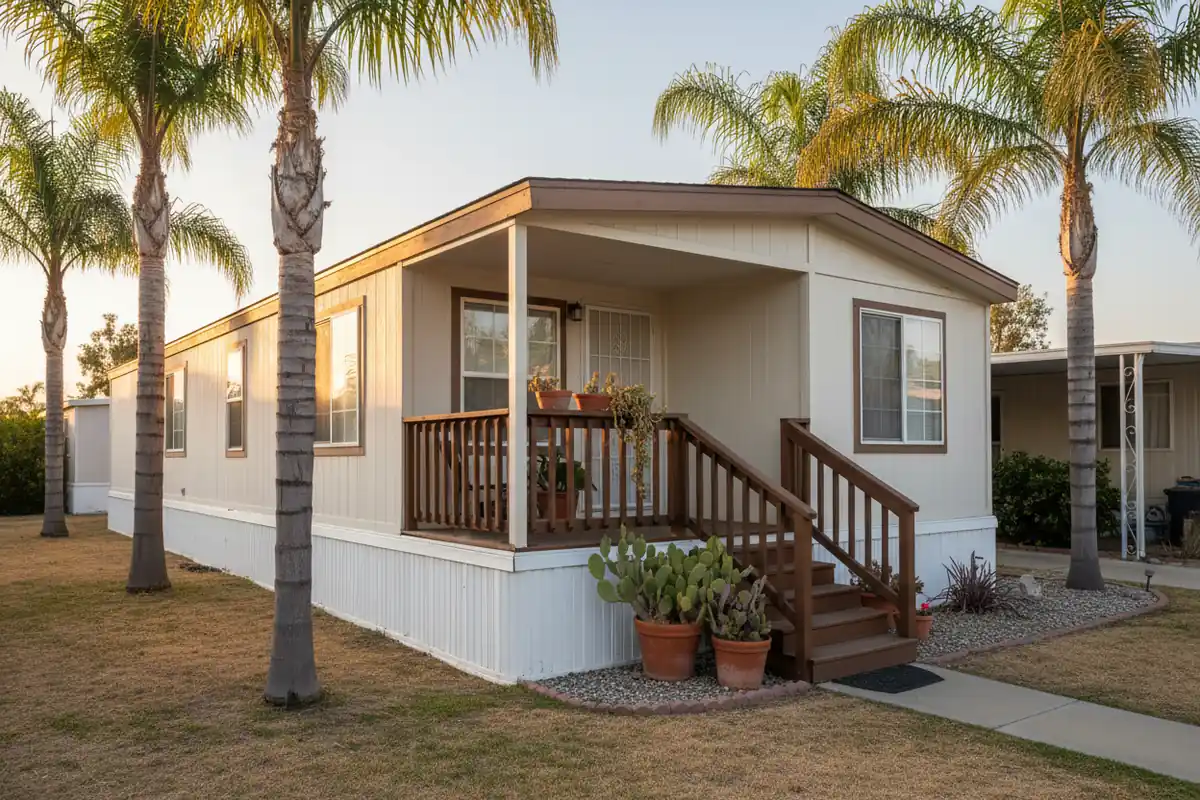
California taxes on a manufactured home are generally billed on the county's secured roll. If they are not a lien on land the owner holds and stay unpaid at the time set for the declaration of default, they move to the unsecured roll. A used home's registration generally cannot be transferred until the county tax collector issues a tax clearance certificate.
On this page
What It Means for Owners
The bill starts on the secured roll. The "secured roll" is the county's list of property taxes tied to property itself, the same list that carries taxes on houses and land. Rev. & Tax. Code section 5830 says the assessment of any manufactured home "shall be entered on the secured roll and shall be subject to all provisions of law applicable to taxes on the secured roll," with exceptions. Under that same section, manufactured home taxes may be paid in two installments.
Two terms come up often. A tax is "delinquent" when an installment goes unpaid past its due date. "Tax-defaulted" describes the later stage, after the county declares the unpaid taxes in default.
For many owners, especially those who do not own the land under the home, the exceptions are where the real difference lies. If the home's taxes are not a lien on real property the owner holds, Rev. & Tax. Code section 5830(a) lets the tax collector use the collection steps for the unsecured roll, the list of taxes not tied to land, once an installment becomes delinquent. Under section 5830(b), if those taxes are still unpaid at the time set for the declaration of default, they move to the unsecured roll, along with any penalties and costs that built up on the secured roll. Put simply, the debt then follows a different collection path than taxes on a house and lot.
One more distinction shapes everything that follows. "The Manufactured Home Property Tax Law" (Rev. & Tax. Code section 5800) does not cover a home that has become real property on a permanent foundation and is "taxed as all other real property is taxed," under Rev. & Tax. Code section 5801(b)(1).
Who It Affects
These rules apply to homes covered by The Manufactured Home Property Tax Law. Under Rev. & Tax. Code section 5801(a), that means a manufactured home or mobilehome that was first sold new on or after July 1, 1980, or that was made subject to this law at the owner's request after the owner notified the Department of Housing and Community Development and the assessor.
Where the home sits changes the picture:
- A home on a rented space. The owner holds the home but not the land under it, so the taxes may not be a lien on any real property of the owner. This is the setting where the unsecured-roll rules of section 5830 come into play.
- A home on land the owner holds. Whether the home's taxes are a lien on that land depends on what the county records show, and the answer decides which collection path applies.
- A home on a permanent foundation. If it has become real property and is taxed as all other real property is taxed, it falls outside The Manufactured Home Property Tax Law under section 5801(b)(1), and its taxes follow the rules for any other house.
Heirs and co-owners face the same rules. A family that inherits a home with back taxes often has to sort out title first. Where title is contested, that is a separate matter for an attorney.
Rules, Disclosures and Fine Print
Three rules carry most of the weight once taxes fall behind, plus one payment option worth knowing about.
The roll transfer. Unpaid taxes on a home that is not tied to the owner's land can change lists, which changes how the county collects them. This is the section 5830(b) rule described above: at the time set for the declaration of default, those taxes move to the unsecured roll.
Tax clearance. Before a used home can change hands on the registration records, the county has to confirm where the taxes stand. Under Rev. & Tax. Code section 5832(a)(1), "the county tax collector shall issue a tax clearance certificate or a conditional tax clearance certificate" on application. A conditional certificate, under section 5832(a)(3), shows that a tax liability exists, the amount due and the final date that amount may be paid before more liability is incurred. Health and Safety Code section 18092.7(a) generally requires the department to withhold registration or transfer of registration of a used home subject to local property taxation until the applicant presents a certificate issued "by the tax collector of the county where the manufactured home, mobilehome, or floating home is located." If that tax collector has not responded to an escrow's written demand, section 18092.7(b) lets the department accept a sworn certification from the escrow officer instead.
The redemption cut-off. Once property is tax-defaulted, there is a last point at which the owner can still clear the default. To "redeem" tax-defaulted property means paying what it takes to clear it. Rev. & Tax. Code section 3707(a)(1) states: "The right of redemption terminates at the close of business on the last business day prior to the commencement date of the tax sale."
The installment plan. Spreading the back taxes over time may be possible, but whether it reaches a given home is an open question. Rev. & Tax. Code section 4217(a) says "Any person may elect to pay delinquent taxes in installments under this article" before 5 p.m. on the last business day before the tax collector obtains the power to sell. Section 4216(a) ties the plan to the amount "necessary to redeem tax-defaulted property." Whether the plan covers a manufactured home's taxes, especially taxes moved to the unsecured roll, is something the county tax collector can confirm. A county may charge a processing fee set by ordinance, under section 4217(b).
Options and Trade-offs
Each path below fits some facts and not others, and none is the answer for every home.
Paying in full. Paying what is owed brings the account current, and the county tax collector can then issue a tax clearance certificate before a transfer. The trade-off is the cash needed at once. The guide to paying delinquent property taxes covers how to get the amount.
An installment plan. The plan in Rev. & Tax. Code sections 4216 and 4217 spreads the redemption amount over time for tax-defaulted property. Whether a particular home qualifies depends on its roll status and lien position, which the county tax collector can confirm. If a plan is started and a year's payment is missed, section 4217(a) limits when it can be started again.
Selling the home. A sale of a used home runs through the tax clearance step, so the back taxes are typically settled before registration transfers. If a tax sale is already scheduled, the sale has to happen in time to redeem before the section 3707(a)(1) cut-off, the last business day before the sale begins. Ways to sell include listing with a real estate agent, selling without an agent, or selling directly to a buyer who pays cash and takes the home as it is. A direct offer often comes in lower than an open-market price, since that buyer takes on repairs, risk and the cost of reselling; the seller gives up price for less preparation, fewer showings and less reliance on a buyer's loan. A cash buyer does not change the clearance requirement. Comparing written offers and estimated net proceeds (price less commissions, repairs, carrying costs, loan payoffs and closing costs) is how an owner can tell which way fits. The guide to selling with delinquent property taxes covers the sale side.
Professional help. A tax professional or the county tax collector's office can answer questions about the account itself. General background on manufactured home taxation is available from the California State Board of Equalization, and registration and title questions fall to the California Department of Housing and Community Development.
Mistakes to Avoid
Missing the redemption cut-off has a fixed consequence. Under Rev. & Tax. Code section 3707(e), if tax-defaulted property is not redeemed by that deadline, anyone with title of record loses all rights in the property, though those rights return if redemption revives, for example when the property is not sold.
Other errors come from assumptions:
- Assuming the installment plan applies. Sections 4216 and 4217 are written for redeeming tax-defaulted property. Whether they cover a given manufactured home's taxes is a question for the county tax collector, not a safe guess.
- Starting a transfer with no clearance. The registration of a used home is held back until a county tax clearance certificate, or the escrow certification the statute allows, is presented.
- Mixing up the two kinds of homes. A home on a permanent foundation taxed as real property is outside The Manufactured Home Property Tax Law, so the unsecured-roll rules of section 5830 do not describe its bill.
- Treating an old bill as the full debt. After a transfer to the unsecured roll, the taxes carry the penalties and costs that built up on the secured roll, so an older bill may not show the current total.
What to Do Next
The county tax collector holds the records that answer the open questions: whether the home's taxes sit on the secured or unsecured roll, the current amount owed or the redemption amount, and whether an installment plan is available for the account. Because the tax clearance certificate under Rev. & Tax. Code section 5832(a)(1) comes from that same office, knowing whether one could issue today is a useful first check before any transfer or sale. The guide on how to check property tax status explains the stages in plain terms.
Many owners start by finding the most recent tax bill or notice for the home, noting the parcel or account number on it, and raising three questions with the county tax collector: which roll the taxes are on, what is owed, and whether a payment plan applies.
Free to ask
Explore my property tax options
Answer a few questions and choose what you'd like to explore: the county process, professional help, or an as-is sale. Your request is routed with your consent.
How it works
- Property & locationWhere the property is, and its county.
- Delinquency detailsAbout how much is owed, and the latest notice.
- Goals & urgencyCatching up, professional help, or selling, and how soon.
Frequently asked questions
How long can you go without paying property taxes in California on a manufactured home?
The Revenue and Taxation Code sets the path from delinquency to default and, for tax-defaulted property, to a tax sale. The owner's chance to redeem ends at the close of business on the last business day before the tax sale begins, under Rev. & Tax. Code section 3707(a)(1). The county tax collector can say where a given account stands.
What happens to a manufactured home's taxes if they go unpaid?
If the taxes are not a lien on real property the owner holds and stay unpaid at the time set for the declaration of default, Rev. & Tax. Code section 5830(b) moves them, with accrued penalties and costs, to the unsecured roll. Collection then follows unsecured-roll procedures instead of the secured-roll path.
Can I sell a manufactured home if I owe back taxes?
A used home's registration transfer is generally withheld until a tax clearance certificate from the county tax collector is presented, under Health and Safety Code section 18092.7(a). The taxes are usually settled through that process. Where a tax sale is set, the window to redeem closes under Rev. & Tax. Code section 3707(a)(1). Common delinquent tax questions covers related points.
What is a tax clearance certificate for a manufactured home?
It is a certificate the county tax collector issues under Rev. & Tax. Code section 5832(a)(1), either a full tax clearance certificate or a conditional one showing the amount due. Health and Safety Code section 18092.7(a) generally requires one from the tax collector in the home's county before a used home's registration transfers.
Is a manufactured home taxed the same way as a house in California?
Not always. Homes covered by The Manufactured Home Property Tax Law go on the secured roll but can move to the unsecured roll after default. A home on a permanent foundation taxed as all other real property is outside that law under Rev. & Tax. Code section 5801(b)(1), and is taxed like a house.
Can I set up a payment plan for delinquent manufactured home taxes?
Rev. & Tax. Code section 4217(a) lets any person pay delinquent taxes in installments before the power to sell, and section 4216(a) ties the plan to redeeming tax-defaulted property. Whether that plan covers a particular manufactured home's taxes, especially on the unsecured roll, is something the county tax collector can confirm.
Does a mobile home count as real property for tax purposes in California?
Only in some cases. Under Rev. & Tax. Code section 5801(b)(1), a home that has become real property on a permanent foundation and is taxed as all other real property is outside The Manufactured Home Property Tax Law. Other covered homes stay under that law, where the roll transfer of section 5830(b) can apply.